The fight against antibiotic resistance and tolerance

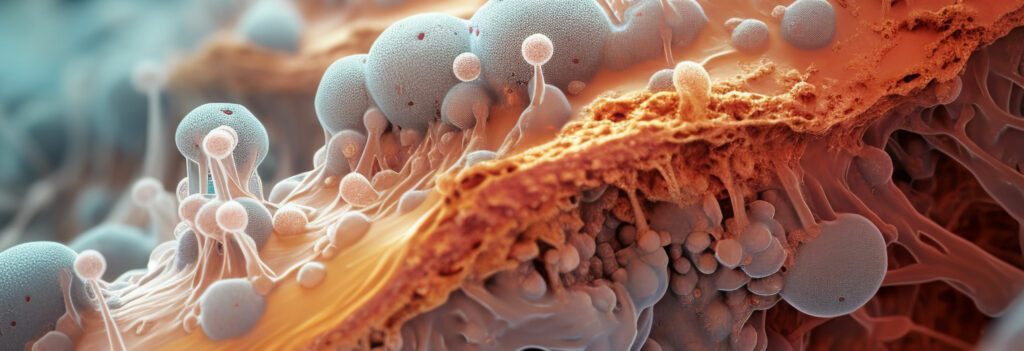
Antibiotics have revolutionized medicine, saving countless lives from bacterial infections. However, a major challenge has emerged: bacterial biofilms – highly structured microbial communities wrapped in protective layers. These biofilms play a key role in chronic infections, such as those found in the lungs of people with cystic fibrosis.

Bacteria within biofilms can survive antibiotic concentrations up to 1,000 times higher than those that kill free-floating (planktonic) bacteria. This phenomenon, known as antibiotic tolerance, makes biofilm-associated infections exceptionally hard to treat and represents a growing threat in the fight against antimicrobial resistance.

Currently, there are no effective treatments that specifically target biofilm-associated infections. The problem becomes even more complex when multiple bacterial species form polymicrobial biofilms, interacting within shared environments and altering how infections behave and respond to therapy.

Our research focuses on unraveling the biology of polymicrobial biofilms – how they form, persist, and resist drugs. By understanding these processes, we aim to identify new strategies to disrupt biofilm resilience and develop next-generation antimicrobial treatments.

This work is part of our broader mission to tackle one of modern medicine’s most urgent challenges: overcoming biofilm-driven antibiotic resistance and building a more sustainable future for infection control.
Shaping the future of infection-fighting medicines

We are passionate about finding new ways to stop bacteria that no longer respond to antibiotics. Antimicrobial resistance (AMR) is one of the most urgent health challenges of our time, and we are working to outsmart these resilient pathogens through innovative science and creative thinking.

Our research uses an advanced skin infection model to explore how bacteria form biofilms—protective layers that make infections stubborn and hard to treat. By studying these hidden bacterial survival strategies, we are discovering new ways to break through their defences and make treatments more effective.

One exciting direction in our lab is the development of antibiotic conjugates — redesigned versions of existing drugs that enter bacterial cells more efficiently and are more effective against resistant strains. This approach could pave the way for smarter, stronger therapies that transform how infections are treated.

Investigating the world’s most dangerous bacteria

We study some of the most serious bacterial threats identified by the World Health Organization (WHO)—known as priority pathogens. These include the notorious ESKAPE group (Enterococcus faecium, Staphylococcus aureus, Klebsiella pneumoniae, Acinetobacter baumannii, Pseudomonas aeruginosa, and Enterobacter species), as well as the common but often underestimated Escherichia coli.

These bacteria are major causes of hospital-acquired (nosocomial) infections and foodborne diseases, and are experts at evading antibiotics. By exploring how they grow, interact, and resist treatments, we aim to uncover the hidden mechanisms that make them so difficult to control.

Our research explores the pathogenicity, virulence, and resistance strategies of these pathogens to reveal new therapeutic targets and inspire novel approaches to treating life-threatening infections. Each discovery brings us closer to redefining how we prevent and combat multidrug-resistant bacteria in clinical care and beyond.